14. Papyri and ostraca
Click on the pictures to view them in full screen format
Introduction by
Professor Dr. Rosario Pintaudi, curator of papyri at Bibliotheca Medicea Laurenziana, Firenze
Papyri constitute one of the most relevant and distinguished sections in the enormous number of written texts in The Schøyen Collection. There are nearly 1100 Hieroglyphic, Hieratic, Demotic, Greek, Aramaic, Coptic, Arabic and Syriac papyri in the collection. They document all periods of Egypt’s history and culture, from pre-dynastic ca. 3300 BC, via the pharaohnic and Ptolemaic periods to the Christian and Arabic periods in 11h c., as well as Israel (1st c. BC), and Syria (10th c.). In addition to papyrus the writing materials are parchment, stone, clay, wood, bone, textiles, glass, faience, copper, and gold.
The strength of the collection is classical texts of Homer, Hesiod, Euripides, Isocrates, and Menander, several represented with the earliest witnesses to parts of their main works, as well as Biblical texts of the Septuagint and Greek New Testament, and Coptic early Biblical texts. Many of these are the earliest mss known of their parts of the Bible. Besides this, every day’s life of a whole population, living from Fayum to Middle Egypt, from Arsinoe to Oxyrinchus is documented.
There are papyri with original provenance of pharaohs from Hor Aha, the first pharaoh, to Tutankhamon, and of institutions from Bibliotheca Alexandrina to the White Monastery. Further papyri with provenance from Morgan’s excavations in Dacour in 1885, from Fustat, Dishna, Nag Hammadi, Kamoula, Cusae, Crocodopolis, Pathyris, Poinkoris, Thebes, Sohag, Qumran and Nitrian desert. The collection has part of the only papyrus surviving from antiquity north of the Alps, in the Benedictine Abbey of St. Martin in Tour (from 675-1789). The main sources for the papyri in The Schøyen Collection have been 6 public and 16 private collections mainly formed in the 19th and first half of the 20th c. It is worthwhile to inform all papyrologists that several famous and relevant papyri collections, such as Adler, Michailidis, Atiyah and Fackelman, now are available for study in The Schøyen Collection.
The first volume of the catalogue, Papyri Graecae Schøyen (P.Schøyen I), Papyrologica Florentina volume XXXV, by Rosario Pintaudi has been published in 2005, and further volumes are in preparation. The aim is to make available for scholars worldwide rich and unpublished materials of wide and outstanding interest.
The Collection
- See also MS 2787, Egypt, 3500-3100 BC
- See also MS 200, Egypt, 3007-2975 BC
- See also MS 1721, Egypt, 3100-2700 BC
- MS 604 Egypt, 1794-1645 BC
- MS 1638 Egypt, 15th c. BC
- See also MS 1695, Egypt, 1292-1069 BC
- See also MS 126, Egypt, 1186-1069 BC
- MS 204 Egypt, 220-203 BC
- See also MS 1987/09, Egypt 1580-1200 BC
- MS 125 Egypt, 325-30 BC
- MS 189 Egypt, 1st c. BC
- See also MS 5068, Egypt, 3rd c. BC
- See also MS 5069, Egypt, late 3rd - 2nd c. BC
- See also MS 2634/3 Egypt, late 2nd-1st c. BC
- See also MS 140, Egypt, ca. 100 BC
- MS 2930 Egypt, 2nd c.
- See also MS 2648, Egypt, ca. 200
- See also MS 2649, Egypt, ca. 200
- See also MS 187, Egypt, mid 4th c.
- See also MS 1359, Egypt, 4th c.
- See also MS 608, Egypt, ca. 600
- See also MS 193, Egypt, 3rd c.
- See also MS 2337, Egypt, 4th c.
- See also MS 2650, Egypt, 4th c.
- See also MS 245/ 07, Egypt, 7th c.
- MS 2752 Egypt, ca. 550-650
See also MS 2787, Protohieroglyphs of ship and oar, Egypt, 3500-3100 BC
See also MS 200, Hor Aha of Upper Egypt, Egypt, 3007-2975 BC
See also MS 1721, Seal of the son of Neith, Egypt, 3100-2700 BC
PRINCESS NUBHETEPTI-KHRED' S NAME
![]()
MS in Middle Egyptian on gold, Egypt, XIII dynasty, 1794-1645 BC, 1 partial sheet, 14x8 cm, single column, 1 column of formal hieroglyphs.
Binding: Barking, Essex, 1990, in a wooden frame, in a cloth gilt folding case by Aquarius.
Provenance: 1. Canopic chest of Princess Nubhetepti-khred, Dacour, Egypt (ca. 1645 BC -1885 AD); 2. De Morgan's excavations, Dacour, Egypt (1885); 3. Jequier Collection and descendants (ca. 1900 - 1989); 4. Christie's 12.12.1989:126.
Commentary: The canopic chest of Princess Nubhetepti-khred is published in De Morgan's exavation reports: Feuilles a Dachour, 1885.
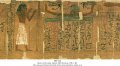
BOOK OF THE DEAD, CH. 81A, 125, 136, 144, 149 WRITTEN FOR THE DECEASED ROYAL SANDAL BEARER MIN-HER-KHETIU
![]()
MS in Middle Egyptian on papyrus, Abydos, Egypt, mid 18th Dynasty, 15th c. BC, 2 large parts of a scroll, part 1: 16x91 cm, (14x91 cm), 43 columns of cursive hieroglyphs, large miniature, 14x23 cm, of the deceased between Anubis and Horus supervising the weighing of the heart against the figure of Maat, above 2 of the 42 gods who witness the judgement, another miniature, 5x18 cm, of 7 of the horned guardians of the gates. Part 2: 14x34 cm, (13x34 cm), 12 columns of hieroglyphs, miniature 13x6 cm, of the deceased, another, 5x14 cm, of the bark of Ra surmounted by udjat eyes, part of a 3rd miniature, 2x6 cm, of a pottery jar, the miniatures painted in red, black, white, yellow and blue.
Context: There are other fragments from the same scroll in Cairo Museum, Egypt, Papyrus Museum, Syracus, Italy, and one fragments sold by Charles Ede Ltd.
Provenance: 1. Maurice Nachman, Cairo (1930'ies; 2. Charles Ede, London, cat. 151:38, part 2; 3. Sam Fogg Rare Books Ltd., London.
Commentary: The text of this papyrus is close in phrasing to the abbreviated version in the papyrus of Nebseny, British Museum, EA 9900, dated as early as mid 18th dynasty. The oldest Book of the Dead in private hands, and among the oldest literary MSS on papyrus. The earliest text is the "Pyramid Recension", carved in the pyramid of Unas at Saqqara, 24th c. BC, while the oldest Book of the Dead that has survived on papyrus, is 16th c. BC. The oldest illuminated MS in private hands.
Published: Barbara Lüscher: Der Totenbuch- Papyrus des Minherchetiu; in Studien zuraltägyptishecn Kultur, Band 36, 2006.
Exhibited: 1. Kon-Tiki Museet, Oslo, from April 2002; 2. Tigris 25th anniversary exhibition. The Kon-Tiki Museum, Oslo, 30.1. - 15.9.2003.
See also MS 1695, Sesh, Hieroglyph of "Scribe", Egypt, 1292-1069 BC
See also MS 126, Book of the Dead, Egypt, 1186-1069 BC
"MINIATURE ROSETTA STONES"
KING OF UPPER AND LOWER EGYPT, PTOLEMAIOS, SON OF KING PTOLEMAIOS, AND MISTRESS OF THE TWO LANDS, BERENIKE, THE BENEFACTOR GODS: TO HATHOR WHO IS IN HEAVEN
![]()
MS in Middle Egyptian and Greek on opaque red and turquoise glass, Cusae, Egypt, reign of Ptolemaios IV, 221-205 BC, 2 plaques, 5x11 cm, single column, 5 lines in cursive hieroglyphs and Greek uncial.
Binding: Barking, Essex, 1989, blue cloth gilt folding case by Aquarius.
Context: A similar green glass plaque with identical inscriptions is in New York: Metropolitan Museum, published in 1948 by W.C. Hayes.
Another plaque, in gold, was published by Breccia in 1931, who also mentions a copy in clay.
Provenance: 1. Temple of Hathor, Cusae, Egypt (ca. 221 BC-1930); 2. Charles Rathon Collection Paris, (ca 1960-1988) 3. Christie's 12.12.1988:253+254.
Commentary: The present foundation plaques of the Hathor temple has been called "Miniature Rosetta stones", being bilingual with similar hieroglyphic and Greek texts. The deciphering of the hieroglyphs by J.F. Champollion in 1822, with the help of the 3-lingual Rosetta stone, found in 1799, could also have been performed with the help of these plaques. Both the Rosetta stone from 195 BC (Hieroglyphs, Demotic and Greek) and the present plaques contain the King's name Ptolemaios, which was the first word deciphered.
Published: J J Clère: Deux nouvelles plaques de fondation bilingues de Ptolémée IV Philopator, in Zeitschrift für Ägyptische Sprache und Altertumskunde, vol. 90 pp 16-22, Berlin, 1963.
Exhibited: 1. Conference of European National Librarians, Oslo. Sept. 1994. 2. "Preservation for access: Originals and copies". On the occasion of the 1st International Memory of the World Conference, organized by the Norwegian Commission for UNESCO and the National Library of Norway, at the Astrup Fearnley Museum of Modern Art, Oslo, 3 June - 14 July 1996.
See also MS 1987/09, Scribe's inkstand and pen-case, Egypt 1580-1200 BC
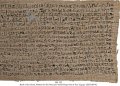
BOOK OF THE DEAD, WRITTEN FOR THE DECEASED ANCH-HEPI, SON OF DJED-HER(FATHER) AND SHEP-SEPEDET (MOTHER), CHAPTER 17
MS in Middle Egyptian on linen, Egypt, 19th dynasty, 325-30 BC, 1 f., 19x64 cm, single column, (17x62 cm), 17 lines in a clear upright Hieratic script, reading from right to left.
Context: Another of Anch-Hepu's mummy bandages' set is at British Museum, M. London BM 75197.
Provenance: 1. Jacques Schulman, Amsterdam, list 236(1988):6.
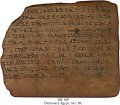
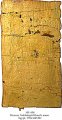
DICTIONARY, EXPLAINING A NUMBER OF VERBS OF MOTION WITH SYNONYMS
![]()
MS in Middle Egyptian on wooden board, Egypt, 1st c. BC, 1 board, 16x13 cm, single column, 12 +10 lines in Hieratic script.
Provenance: 1. Charles Ede, London (ca. 1980-1986); 2. Bernard Quaritch Ltd, London (1986); 3. Moulton Collection, USA (1986-88); 4. Bernard Quaritch, London.
Commentary: Under publication by Professor W.J. Tait, University of Durham. This text is of considerable interest. It is the only text of its kind in Egypt, and throws new light on words and their meanings. Many words included are rare with hitherto unclear meaning, which now has been clarified. It is also extraordinarily late for the use of Hieratic script.
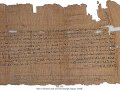
1. SALE OF VACANT LAND IN PATHYRIS FROM ISIDORUS (PAESIS), SON OF THEON (TEOS), WITH CONSENT FROM HIS WIFE, TAKEB, DAUGHTER OF NECHOUTES TO HORUS, SON OF NECHOUTES. PUBLIC NOTARY: ESPNUTI, SON OF JEHO 2. GREEK TAX RECEIPT, SIGNED BY AMMONIUS, BANK CHECKING-CLERK ![]()
MS in Demotic and Greek on papyrus, Crocodilopolis, Egypt, 15 December 124 BC, 1 papyrus, 21x57 cm, single column, 10 lines in a Demotic documentary script. Text 2: In Greek, Hermonthis, 3 August 123 BC, 3 lines in a Greek cursive documentary script.
Context: From a hoard of 21 Greek and 31 Demotic, dated papyri, MSS 128-179.
Provenance: 1. Horus, son of Nechoutes, family archive, Gebelên, Egypt (ca. 140-89 BC); 2. Buried in a pottery jar in the sand at Gebelên, the site of the ancient Pathyris of the Thebaid (ca. 88 BC-1924); 3. Hadj Mansur Mahmûd, Luxor, Egypt (1924); 4. Elkan Nathan Adler, England (from 1924); 5. Dr. Martin Bodmer, Genève (until 1970); 6. H.P. Kraus Cat. 126(1971):96.
Published: The Adler Papyri, Oxford University Press, 1939 : D2.
MARRIAGE SETTLEMENT BETWEEN UNNOFIR, SON OF PHIBIS AND TAESI, DAUGHTER OF HORUS. TRANSACTED BY NEKHTMIN SON OF NEKHTMIN, PUBLIC NOTARY
![]()
MS in Demotic on papyrus, Pathyris, Egypt, 97-96 BC, 1 papyrus, 42x31 cm, single column, 12 lines in a Demotic documentary script.
Context: From a hoard of 21 Greek and 31 Demotic, dated papyri, MSS 128-179.
Provenance: 1. Horus, son of Nechoutes, family archive, Gebelên, Egypt (ca. 140-89 BC); 2. Buried in a pottery jar in the sand at Gebelên, the site of the ancient Pathyris of the Thebaid (ca. 88 BC-1924); 3. Hadj Mansur Mahmûd, Luxor, Egypt (1924); 4. Elkan Nathan Adler, England (from 1924); 5. Dr. Martin Bodmer, Genève (until 1970); 6. H.P. Kraus Cat. 126(1971):96.
Published: The Adler Papyri, Oxford University Press, 1939 : D14.
See also MS 5068, Hesiod, Egypt, 3rd c. BC
See also MS 5069, Homer: Odyssey, Egypt, late 3rd - 2nd c. BC
See also MS 2634/3, Hippocrates: Epidemics, Egypt, late 2nd-1st c. BC
See also MS 140, Sale of Corn-Land, Egypt, ca. 100 BC
CHARITON OF APHRODISIAS IN CARIA: THE LOVES OF CHAEREAS AND CALLIRRHOË, BOOK II, CHAPTER XI, § 5 AND 6, AND COLOPHON
![]()
MS in Greek on papyrus, Egypt, 2nd c., part of a scroll, 17x8 cm, 1 column remaining, (12x6 cm) 21+23 lines in Greek half uncial.
Provenance: 1. G.A. Michaïlidis, Cairo (ca. 1955); 2. Private collector, Frankfurt; 3. Bruce Ferrini, Akron, Ohio.
Commentary: The action of the story, which is to a certain extent historical, takes place during the end of the Peloponnesian War. Opinions differ as to the merits of the romance, which is an imitation of Xenophon of Ephesus and Hesiodorus.
Published: D.S. Crawford, ed.: Papyri Michaelidae, being a catalogue of the Greek and Latin papyri, tablets and ostraca in the library of Mr. G.A. Michaïlidis of Cairo. The Egypt Exploration Society. Aberdeen University press, 1955, no 1.
See also MS 2648, Bible: Joshua, Egypt, ca. 200
See also MS 2649, Bible: Leviticus, Egypt, ca. 200
See also MS 187, Bible: Exodus, Egypt, mid 4th c.
See also MS 1359, Isokrates: Ad Demonicum, Egypt, 4th c.
See also MS 608, Acknowledgement of a loan, Egypt, ca. 600
See also MS 193, The Crosby-Schøyen Codex, Egypt, 3rd c.
See also MS 2337, Melito of Sardis, Egypt, 4th c.
See also MS 2650, Bible: Matthew, Egypt, 4th c.
See also MS 245/ 07, Christian Literary Text, Egypt, 7th c.
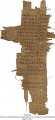
BIBLE: JESUS SAYING: HAIL MY MOST CHOSEN APA CHAMOUL, I AM THE CHRIST WHO HEARS EVERYONE WHO CRIES OUT, - CHRIST WHO GIVES A CURE FOR EVERY SICKNESS -
![]()
MS in Sahidic on papyrus, Coptos, Thebes, Egypt, ca. 550-650, 2 partial ff., 17x13 cm and 18x9 cm, single column, 16+18 lines in a large Coptic uncial.
Context: Another partial f. from the same codex in British Library, published by E.O. Winstedt in: Coptic texts on St. Theodore the Oriental.
Provenance: 1. Coptic Monastery, Coptos, Thebes (ca. 550-650); 2. Guiglelmo Libri, London; 3. Sir Thomas Phillipps, Cheltenham, Ph ?, (-1872); 4. Katharine, John, Thomas & Alan Fenwick, Cheltenham, (1872-1946); 5. Robinson Bros., London (1946-1965); 6. Sotheby's 1965?; 7. Charles Ede, London (1965); 8. Private collector, England (1965-1998).
Commentary: The text contains a saying by Jesus that never entered the Gospels, neither is known from any of the Gnostic MSS nor elsewhere.
BIBLE: ACTS 8:40 - 9:14; 9:16 - 27
![]()
MS in Syriac on papyrus, Syria, 9th c., 1 papyrus, 11x7 cm, single column (9x4 cm remaining), 23+23 lines in a small, neat Syriac Sertâ book script with some estrangela features, a cross-like sign in margin.
Context: Another Peshitta New Testament, is MS 2080, also from 9th c., but on vellum.
Provenance: 1. Monastery of the Syrians in the Nitrian Desert (ca. 10th c-); 2. Maggs Bros., London.
Commentary: There are no variants from the text of the British and Foreign Bible Society's edition of the Peshitta New Testament. From a codex. Syriac papyri are extremely rare. In the 10th c. Moses of Nisibis, abbot at the Monastery of the Syrians, built up an extraordinary fine collection of Syriac MSS, which today forms the basis of the Vatican and British Library collections of Syriac MSS.
Published: Sebastian P. Brock: Two Syriac Papyrus Fragments from the Schøyen Collection; in: Oriens Christianus, Band 79, 1995, pp. 9-22.
1. TEACHING OF THE APOSTLES, CANONS 3, 4, 12 AND 20, A CANON COLLECTION ALSO CALLED THE TEACHING OF THE APOSTLE ADDAI 2. JOHN(CHRYSOSTOM?): EXCERPTS. FROM THE DISCOURSE OF MAR YO'ANIS ON THE PASSION? ![]()
MS in Syriac on papyrus, Syria, 9th-10th c., 1 partial f., 9x10 cm, single column (9x9 cm remaining), 19 +16 lines in Syriac Sertâ book script.
Context: The present f. belongs to the same MS as Firenze PSI Inv. 3020, published by J-M. Sauget: Le fragment de papyrus syriaque conservé à Florence, Annali dell'Istituto Universitario Orientale di Napoli, 45(1985), pp. 1-16. The Florence folio is immediately preceeding the present MS.
Provenance: 1. Monastery of the Syrians in the Nitrian Desert (ca. 10th c-); 2. Maggs Bros., London.
Commentary: Syriac papyri are extremely rare. In the 10th c. Moses of Nisibis, abbot at the Monastery of the Syrians, built up an extraordinary fine collection of Syriac MSS, which today forms the basis of the Vatican and British Library collections of Syriac MSS.
Published: Sebastian P. Brock: Two Syriac Papyrus Fragments from the Schøyen Collection; in: Oriens Christianus, Band 79, 1995, pp. 9-22.